

Imaging & Quantifying Immune Cell Infiltration in Murine Models of Liver Failure
Dr. Gregory CG Hugenholtz, Department of Surgery, University Medical Center Groningen, presents "TAFI deficiency promotes liver damage in murine models of liver failure through defective down-regulation of hepatic inflammation".
Webinar
Imaging & Quantifying Immune Cell Infiltration in Murine Models of Liver Failure
08 Sep, 2021
Key Takeaways
TAFI plays a protective role in liver disease: TAFI deficiency increases liver damage, fibrosis, and inflammation in chronic liver failure models.
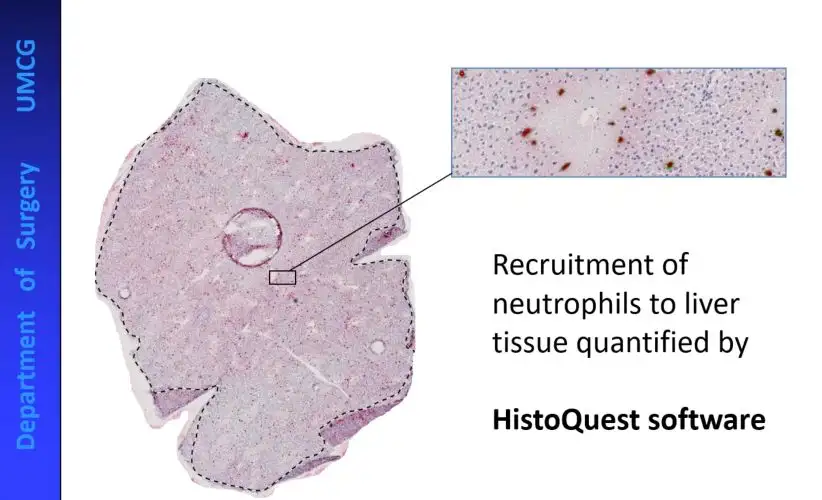
Inflammatory responses increase in TAFI deficiency: Elevated neutrophil infiltration in TAFI-deficient mice indicates enhanced hepatic inflammation associated with disease progression.
Different responses in acute vs. chronic liver failure: TAFI-deficient mice showed transient early protection in acute liver failure models, but this effect was lost at later timepoints as liver damage increased.
Automated tissue analysis improves quantification: Digital image analysis enabled high-throughput identification and quantification of neutrophils within liver tissue.
Implications for future research and therapies: Understanding the role of hemostatic factors such as TAFI may help guide future approaches to modulate inflammation and coagulation in liver disease.
